
The Xinjiang Procedure and The Slaughter
Between 25,000 and 50,000 People Are Executed in China Every Year. The purpose: Organ Harvesting
Haaretz/David Stavrou Kay: Ethan Gutmann learned about the practice in China’s Xinjiang region, embarked on an extraordinary journey through Kazakhstan, and returned with a groundbreaking book. An interview. . .
Opening
The bottom line of American researcher and human-rights activist Ethan Gutmann’s new book appears at the bottom of page 281, and it is so disturbing that it is difficult to believe it could be true. According to Gutmann, between 25,000 and 50,000 people are quietly plucked every year from the detention camps in Xinjiang, in northwestern China, so that their organs can be harvested by the Chinese transplant industry. Twenty-five thousand murdered for organs, Gutmann stresses, is a minimum estimate.
This is not the first time China has been accused of using organs taken from executing prisoners. In 2005, Chinese officials themselves acknowledged that organs from death-row prisoners were being used for transplantation. At the end of 2014, however, the man who had served as the country’s vice minister of health and headed China’s transplant system announced that, beginning in January 2015, the use of prisoners’ organs would cease and that from then on, organs for transplantation would come exclusively from voluntary donations. Nevertheless, Gutmann and other researchers argued even then that the reform was largely cosmetic and that organ harvesting from prisoners had not only never stopped, but had developed into a huge industry. Among other things, they based their claims on hospital data, studies and medical publications from China, unusually short waiting times for transplants, and testimony from doctors and former prisoners. They also claim that these organs are used by “transplant tourists” who travel to China from other countries.
In his new book, Gutmann again argues that the true number of transplants performed in China is at least 60,000 a year (since a single prisoner can be the source of more than one organ).
In his previous book, The Slaughter: Mass Killings, Organ Harvesting, and China’s Secret Solution to Its Dissident Problem (Prometheus Books, 2014), Gutmann focused primarily on victims among practitioners of Falun Gong—a Chinese spiritual movement that has been subjected to severe persecution by the Communist regime since 1999. In the book, Gutmann argued that the persecution created an enormous pool of young and healthy prisoners of conscience, some of whom underwent medical examinations that were not intended to treat them. Instead, he claimed, they determine whether their organs were suitable for transplantation. Based on interviews with former prisoners, doctors, police officers and other sources, he estimated that tens of thousands of Falun Gong practitioners were killed for their organs between 2001 and 2008.
In his new book, The Xinjiang Procedure (Armin Lear Press, 2026), the focus shifts from Falun Gong to Xinjiang, a region with a population of more than 25 million. According to available figures, the Muslim Uyghur minority makes up about 44 percent of the local population, while Han Chinese, China’s largest and dominant ethnic group, account for around 42 percent. Other Turkic minorities—including Kazakhs, Kyrgyz and others—make up the remainder.
Gutmann’s starting point is what began happening in the region in the middle of the previous decade. Alongside the establishment of a vast system of “re-education camps,” the authorities began restricting birth rates among Turkic minorities, created an enormous technological system of surveillance and control, and began exploiting the local population as forced labor in the region’s many industries, which supply goods to markets around the world. The Chinese authorities say that the entire system is intended to combat terrorism, separatism and extremism, but according to Gutmann and the sources he cites, mass killing amounting in practice to ethnic cleansing is taking place in the region. As part of these measures, beginning in 2017 virtually all Uyghurs and members of other minorities over the age of 12—millions of people—were required to undergo examinations that included blood tests and DNA collection of a kind suitable for determining compatibility between organ donors and recipients. The fact that members of the minorities never received results, while Han Chinese in the region were not required to undergo the same examinations, aroused Gutmann’s suspicions. The Uyghur population, he began to suspect several years ago, was being turned into an enormous organ bank.
According to Gutmann, the focus on Xinjiang is connected to the fact that ethnic minorities, particularly Muslim minorities, are concentrated there. According to the allegations, the mass campaign of repression, detention, “re-education” and forced labor created a large captive population from which organs could be taken. Gutmann and others also argue that, beyond the political dimension, there is deep racism and a sense of superiority among Han Chinese, China’s ethnic majority, toward minority populations, making repression — including, according to the allegations, organ harvesting — easier for Chinese society to tolerate. Gutmann adds that the mineral resources within the Xinjiang region are paramount to the CCP’s global ambitions. culling the native Muslims – the Uyghur and Kazakh population – and replacement with Han Chinese settlers loyal to the CCP further supports that vision.
To investigate this suspicion, he embarked on a journey that forms both the journalistic and literary heart of the book. Because journalistic investigation inside Xinjiang itself has become virtually impossible as a result of Chinese repression and intense surveillance, Gutmann decided to seek out people who had emerged from the camps. A small number of former prisoners had managed to leave China and were scattered around the world in places such as Turkey, Canada and various European countries. Members of the Uyghur diaspora had already been interviewed by Gutmann in the past and by the media (including by the present writer) and he returned to some of these witnesses and conducted in-depth interviews with them, some filled with horrific descriptions of what was happening inside the Xinjiang camps. But there was also a significantly larger group of ethnic Kazakh detainees who had managed to secure their release and were hiding out in Kazakhstan, and Gutmann realized that there he could find people capable of providing first-hand accounts of what was happening in the camps and adding valuable information that no one had previously heard or analyzed.
It was, however, a difficult undertaking. The first problem was that these witnesses were in a vulnerable position, and the threat to family members who remained in China would increase significantly if the authorities discovered that they were providing information to the outside world. The second was that China’s surveillance capabilities had expanded into Central Asia, while foreign human-rights researchers could be regarded as spies.
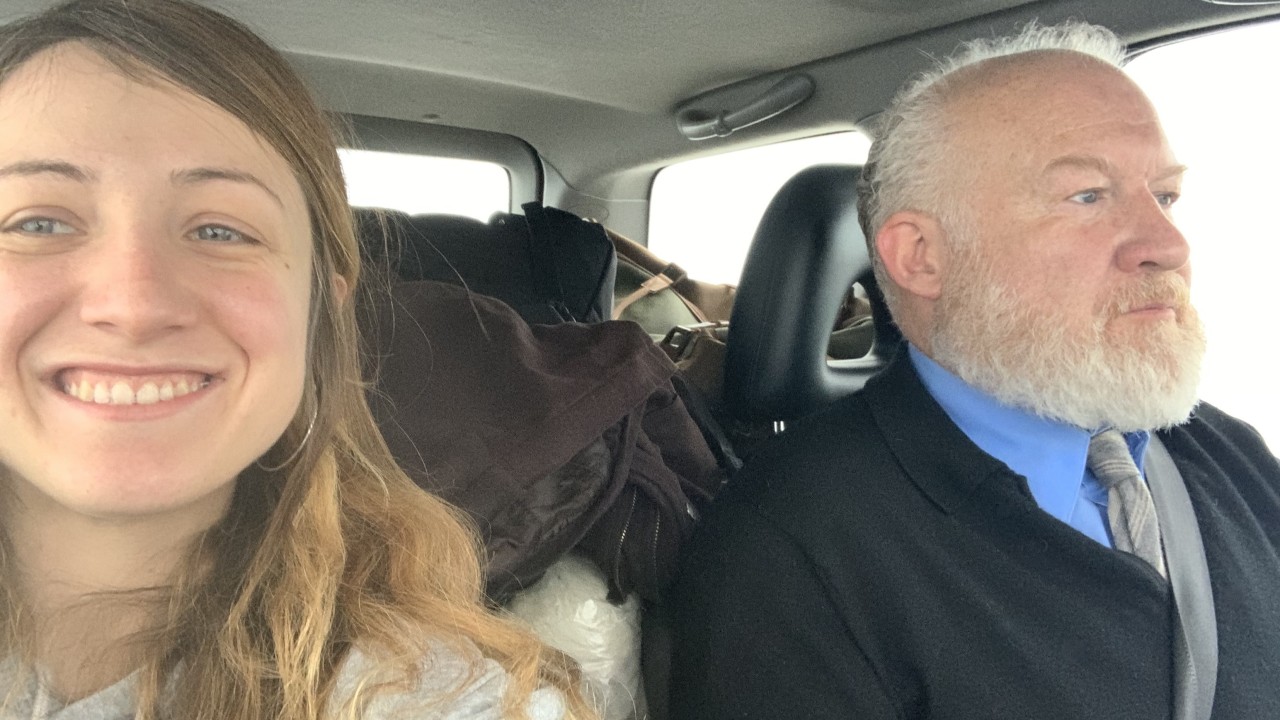
This was the origin of the extraordinary journey described in the book. Gutmann decided to reach Kazakhstan under the radar. In Germany, Falun Gong patrons provided an old four-wheel-drive vehicle without modern electronics that might be used for tracking or surveillance. He drove all the way to Kazakhstan through numerous countries, entering the country by a route normally used by truck drivers rather than tourists, businesspeople or other Western visitors. He also brought along his foster daughter, 24 year-old Josephine De Haan-Montes, as well as skiing equipment, to support their cover story as somewhat eccentric father-and-daughter pair of Western tourists on an adventurous graduation trip.
The two took every possible precaution to minimize their digital footprint. They did not connect to the internet or use apps, replacing them with paper maps and compasses. Instead of Airbnb, they stayed in remote motels, and instead of using credit cards Gutmann carried substantial amounts of cash, which he concealed in the lining of his trousers, inside a fake Coke can and in a hollow hairbrush. They used only burner phones. They made their way from Europe through the Caucasus and across the Caspian Sea to Kazakhstan. Once they reached their destination, Gutmann began locating and interviewing around twenty refugees from the Xinjiang camps.
It was these interviews that led him to his numerical estimate. In the chapter “The Perfect 28,” he analyses the testimony of witnesses who had been held in different camps. Again and again, he says, they describe blood tests and examinations of their organs followed by prisoners disappearing—particularly young, healthy people in their late twenties and early thirties. Gutmann calculates for each camp the percentage of prisoners who, according to these accounts, were allegedly selected for organ harvesting—a little over 3.5 percent in average. Combining this with estimates that around one million people are being held in the camps at any given time, he arrives at a minimum estimate of approximately 25,000 people who, he argues, could supply around 60,000 organs annually—the figure he regards as the minimum annual output of China’s transplant industry. Gutmann acknowledges that this is not a documented tally of deaths, but an extrapolation based on testimony from a relatively small number of survivors. The book presents the testimonies as a cumulative pattern and the calculation as a “probability range,” rather than as individual proof of what happened to each person who disappeared.
Interview section:
Gutmann, 68, is a veteran researcher whose books and investigations have taken him to many countries around the world. But he has a special connection to Israel. His father, David Leo Gutmann, was an American Zionist who served aboard the illegal immigration ships Ben Hecht and Peducah (Geula), and was captured and imprisoned by the British in Cyprus and Acre in 1947. He also took part in Israel’s War of Independence. After returning to the United States, he became a psychologist, and Gutmann remembers him above all as “an extraordinary interviewer” in his work with Navajo and Druze communities — a man who approached the search for psychological insight with respectful patience, humanity and warmth. Gutmann himself lived in Israel for a short period in the late 1960s and early 1970s and has visited the country many times since. The painter Nahum Gutman was his father’s uncle.
He is not a conventional researcher. Although he is an expert on China, US-Soviet history, and weapons systems, he has also worked in media as a journalist and researcher, as well as in public relations and international business relations. His research methods are unconventional, and he does not even try to present himself as neutral. He is deeply critical of China and other communist regimes and he’s currently a senior research fellow at the Victims of Communism Memorial Foundation in Washington D.C, an anti-communist research and memorial institute loosely associated with traditional conservative circles in the United States. When he is not in Washington, on speaking tours, or traveling to collect information and conduct interviews, he lives in a mountain home in his native state of Vermont in the northeastern United States.
The path that ultimately led Gutmann to write about the alleged killing of members of ethnic and religious minorities in China for their organs runs through a substantial body of work he has produced on the country. His first book on China, Losing the New China: A Story of American Commerce, Desire, and Betrayal, published in 2004, drew in part on his years in Beijing and examined the relationship between Western corporations and the Chinese regime. Gutmann argued that American companies entering China had cooperated with the Chinese Communist Party’s mechanisms of control and surveillance.
His second book, The Slaughter: Mass Killings, Organ Harvesting, and China’s Secret Solution to Its Dissident Problem, published in 2014, dealt directly with the subject that would become central to his work: allegations of organ harvesting from prisoners of conscience in China. Drawing on interviews with former prisoners, doctors, police and security personnel, and human-rights activists, he focused particularly on the fate of Falun Gong practitioners and argued that China’s transplant system had developed into a mechanism in which practitioners were used as the primary source of organs.
By then Gutmann had already begun to suspect that the practice was expanding beyond Falun Gong, and the journey he undertook to investigate those suspicions became the journalistic and literary heart of his new book.
Gutmann’s book covers a wide range of fields. The charges he levels are grave, and his research is therefore both deep and interdisciplinary. Understanding the economic and political dimensions of the transplant market requires knowledge of geopolitics as well as a business understanding of the pharmaceutical market. Beyond that, an understanding of the medical aspects of organ transplantation is essential, while understanding why it is difficult in China to obtain organs from donors who consented to donate them after death requires an understanding of Chinese culture. Cyber intelligence, satellite imagery and leaked documents provide additional critical information. But the core of the evidence, Gutmann tells Haaretz, still comes from somewhere else. “This is an area where artificial intelligence can be of very little help,” he says, “because the main information comes from the human element — from witnesses, those few who managed to get out and who are facing a huge state that threatens them through a system of influence it has built beyond its borders and through very real threats against family members who remain inside China”.
The global struggle against forced organ harvesting for transplantation also depends on a relatively small number of people. Gutmann speaks of human rights lawyers, activists and organizations in the Uyghur diaspora, as well as a handful of senior figures in the international medical establishment. One of the most important of them is Israeli.
Prof. Jacob (Jay) Lavee, who established and headed the heart-transplant unit at Sheba Medical Center and is a former president of the Israel Transplantation Society, is one of the leading voices in the medical campaign against the transplantation of organs taken from prisoners in China. As early as 2008, he initiated Israeli legislation preventing insurance companies and health funds from financing transplants in countries where organ trafficking takes place. In 2022, together with Australian researcher Matthew Robertson, he published a study examining Chinese medical publications from 1980 to 2015 that found evidence that Chinese doctors had removed vital organs from prisoners who were not yet dead, effectively participating in their executions. The study also became a practical tool in the campaign: in its wake, the International Society for Heart and Lung Transplantation, where Lavee served on the ethics committee and was the senior author of the statement, adopted a policy prohibiting cooperation with those involved in harvesting organs from executed prisoners. In practice, this amounted to an academic boycott of China’s heart and lung transplant sector — Chinese researchers and surgeons would no longer be able to publish in the society’s journal or present their work at its annual conference.
Even before that, the issue had reached the international legal and public arena. In 2019, an independent tribunal chaired by the British lawyer Sir Geoffrey Nice, after months of examining testimony and evidence, concluded that forced organ harvesting had been taking place in China for years and constituted a crime against humanity. The tribunal’s conclusions added weight to allegations raised for years by human rights activists and journalists, while the study by Lavee and Robertson contributed a different kind of evidence: an analysis of the Chinese medical literature itself, which they argued revealed cases in which the removal of organs was effectively part of the execution process.
Your book doesn’t begin with statistics about transplantation or an explanation of the Chinese medical system, but with the story of Rukiye Perhat, a Uyghur woman who describes years of imprisonment. Perhat gives an extraordinarily graphic account of the sexual violence she says she experienced and talks about rape, torture and thoughts of suicide. Why did you decide to begin with her rather than with the evidence of organ harvesting?
“I felt that the book needed something deeply personal in the beginning. I lived in England for many years, and I knew people at the BBC. And I knew how some of them sit there and say, well, this isn’t possible. It’s remarkable to me that this is a country which conquered half the world, and these people are their descendants, and this is how they react: How could this be taking place? How could something like this happen? Well, Rukiye is the proof that the unthinkable is thinkable. Stop this rigid form of thinking. People ask, why would the Chinese do that? It’s not rational what they’re doing to her. Well, it is rational within a very limited set of rules, within a subculture of discipline within the Chinese Communist Party. And more effectively than almost any witness I’ll ever have, Rukiye understood that culture. Within the Falun Gong, they often tried to be more optimistic. Maybe there’s a way they can convince the prison guards to be nicer. Perhaps even save the guard’s souls through kindness. Teach them not to do these things. But Rukiye understood the guards as the enemy – how they think. What they were going to do next. She planned accordingly – for the next battle. And to me, her resistance was breathtaking”.
The book describes how Rukiye refused to answer questions and sign documents, and how she at one point kicked an interrogator, all during a long period of imprisonment that included extremely severe torture. According to her account, her aunt paid money to secure her release from prison when she had reached a state of comatose. Later, her aunt also raised money to obtain a new identity and passport for her, which she used to leave China around 2012–2013.
Gutmann adds that he consciously wanted to confront the reader with something that would be difficult to dismiss: “I needed, I wanted, to hit the reader right in the teeth. You sit there in your comfortable chair. You say it’s impossible, but it’s possible. Not just possible, but likely. It’s happening. Now we can advance to organ harvesting”.
Sexual violence appears repeatedly in the testimonies in the book. Do you think these are individual acts committed by guards, or is sexual violence itself part of the system of repression?
“What we’ve seen in the Uyghur rapes is an assault, not only on the women but also on the Uyghur male. I don’t think this is different than October 7th. it’s about either penetrating the males physically, or penetrating their psyche, because they can’t protect their women. It’s humiliation and it’s an eternal dehumanization tactic. It’s about turning people into screaming animals, screaming for mercy, or even mutely enduring like animals. What do we do with that? I don’t know. It is a signal of deep sickness within a society”.
In the chapter that is dedicated to interviews you made in Kazakhstan and your discovery that most victims are about 28 years old, you describe an interview which proves your suspicion and you write: “I remember the moment. The moment when you know it’s true”. What was that like? How did you know that it was true?
“It goes back to my interview with a medical witness I called “Samal”. There’s nothing like a medical witness. It grips our imagination to have someone who actually participated. All she did was clean intestines from bodies, but she was still part of the process”. In the book Samal tells Gutmann about a veterinarian who had been assigned to work as a doctor in one of the camps. The veterinarian was taken beneath the camp, at night, to a cold underground compound containing three medical clinics. There, according to her account, armed guards in black masks oversaw an eleven-person medical team as bodies of detainees were brought in and processed before being taken behind the clinics’ locked doors. On one occasion there were three bodies, on another, seven; the veterinarian was ordered to remove or clean their intestines, and when the vet recognized the body of a young mother from the home village and refused to cut the body, the vet was severely beaten by police. Gutmann writes that as Samal’s story unfolded, he realized that she was not merely repeating what the vet had told her: she had herself been inside the underground facility. Samal then goes on to describe the underground site in first-hand detail: no surveillance, two armed guards wearing black masks, and an “extraction line” staffed by eleven doctors. A little later, Gutmann says that Samal confirmed that the veterinarian had taken her down to the operating room as a surgical assistant many times.
Another witness who Gutmann talked to, “Fatimah”, recalled three healthy women in their late twenties disappearing from her cellblock in the middle of the night after undergoing medical examinations. She did not witness what happened to them, but her account became part of a pattern Gutmann says he encountered repeatedly: young and apparently healthy detainees were subjected to blood tests and organ-focused examinations and then, vanishing. Gutmann asks Fatimah about the women: were they sick? Were they sexually attractive? could they have been released? how old were they? According to Fatimah they were not particularly attractive but they were healthy, almost all around the age of 28. As he continued interviewing other former detainees, the same demographic profile appeared repeatedly with 28 recurring often enough to give the chapter its title, “The Perfect 28”. The accumulation of such accounts — Fatimah’s disappearing young women followed by Samal’s description of what happened to bodies inside a secret medical facility — was a turning point in the investigation, the moment he knew it was true.
“There are different ways to look at a moment like that”, Gutmann says, “one way is to think of it as a moment like the first time a child comes running downstairs and witnesses the Christmas tree and the presents. Another, is a deep sense of horror. For me, it was a bit of both because it was like my god, it’s true and it’s a sensational story, and maybe a story that should be told in human terms, not only legal ones, and that’s what I specialize in”.
When it comes to the specific age, Gutmann explains: “my personal theory had its origins in a large document dump of mainland medical records that Falun Gong activists had hacked into and painstakingly translated. The transplant records centered around organ donors who were in their late twenties (although this anomaly was never remarked on, except to state that the young organ donor had invariably died of “heart failure.” The records also made it obvious that the donor was physically very close to the recipient, perhaps even in the same room. My witnesses, from the Xinjiang camps, almost invariably described the average age of disappearances as 28, so i went with that number. The witnesses also described the “disappeared” as unusually healthy, rather than being sexually attractive, rebellious, or sharing any other common features. That’s the origin of my theory – that it’s driven by health and organ quality – and it’s germane that no medical professional has disagreed with me on this point”.
Another important figure in your investigation is Enver Tohti, the Uyghur surgeon who has said that, as a young doctor in Xinjiang back in the nineties, he was ordered to remove organs from an executed prisoner. You have known him for years. Why is he so important to this story?
“Well, he is very unusual because we’ve never really had a doctor confess. To this day, we really don’t have doctors who participated in this, coming out with it, not in full anyway. Enver stood up alone. As an immigrant to the UK, he wasn’t even clear whether there was a statute of limitations. He thought he could literally be seized for admitting it. But he did. He said he just found himself raising his hand at a hearing in Westminster, almost involuntarily, and he told the truth. That’s a phenomenal act of courage”.
In the book Tohti tells Gutmann about how he was ordered to an execution ground near Urumqi and instructed to remove the kidneys and liver of a prisoner who had been shot but was still alive. Tohti says the gunshot had deliberately not been immediately fatal; he performed the extraction and later described his responsibility starkly: “I killed that man”. Gutmann stresses that Tohti could not establish whether the victim was a political or religious prisoner, although the operation took place at an execution ground used for political prisoners. Gutmann says that his relationship with Tohti today has gone long beyond that of researcher and witness. They are now good friends.
The journey to Kazakhstan sounds adventurous when you describe it — an old car, paper maps, burner phones, skis on the roof — but you were going into an authoritarian country to secretly interview people who had escaped Chinese camps. Were you afraid? were you worried about bringing Josephine with you?
“Frankly, In Josephine’s case, I think this was a more active risk than my own – and that is why she might get something out of the experience. On balance I felt there actually was something paternal about my thinking. I’ve had a lot of people ask me that question. I mean, of course, I was very worried that we would get into a situation where she’d be sexually abused or something like that. But we weren’t dealing with the Chinese. We were dealing with the Kazakhs, and I really think that’s far more unlikely within Kazakhstan. It is an authoritarian state. It is a police state. But it is not like China, it’s more like, say, Morocco”. Gutmann says the greater danger was to the people he was interviewing: “any witness I talked to was under great danger, potentially”, he says but adds that even though he was putting witnesses in potential danger, he doesn’t think that anyone died or suffered severe consequences because of his book. “That’s my strong view”, he says, “And I’m not one of these people who believes that you’ve got to get the truth out no matter what. Of course, the witness matters”.
Do you believe you were being monitored in Kazakhstan?
“No, I do not believe we were monitored. I believe that because of the careful way we entered the country, coming in from the wrong side, along with the truckers”.
Did all the precautions — the old car, the burner phones, the shielding bags — actually matter?
“Yes. The key one that mattered was never, ever fire up a device. Ever. Every police state or centralized surveillance state has a weakness. And Kazakhstan had a weakness. They have mostly given up on human intelligence. Similar to the Russians, almost exclusively, they use electronic intelligence”.
Closing
Gutmann says that work of this kind requires more than professional curiosity. “You either have to be inside the process itself or you have to care very much”, he says. In his case, he believes, it is a combination of stubbornness and something much older. “The Holocaust had a massive impact on me”, he says. He remembers learning about it from an early age and reading about it voraciously. He also recognizes something darker in his attraction to such subjects. “Being very, very sad can become a kind of an addictive emotion too”. He remembers a visit to Birkenau. Walking through the camp, he suddenly realized that the uneven ground beneath him was a place where the ashes of murdered people had been dumped. “That feeling swept over me and it was just overwhelming”, he recalls, “I’ll never forget it. It was as if the whole world had turned into this world. Into the Holocaust”.
Still, there is also a note of optimism in Gutmann’s words. “With the information we have about what the Chinese are doing, we can turn this into a crime, we can end their dream of becoming global pharmaceutical suppliers, and we can prevent the practice from spreading to other countries. It has already been attempted in Vietnam, there are rumours about Cambodia, North Korea and Kazakhstan as well.”
The allegations concerning China have also reached the U.S. Congress. In June this year, after the House of Representatives passed the Stop Forced Organ Harvesting Act, the Senate advanced two bipartisan bills aimed at combating the practice: one addressing forced organ harvesting worldwide, and the other focusing on allegations of forced organ harvesting in China and the persecution of Falun Gong practitioners and Uyghurs, including, among other measures, visa restrictions on Chinese transplant surgeons. Both bills were approved by the Senate Foreign Relations Committee. An important development came in the last few days: on September 28, the Senate unanimously passed the Falun Gong and Victims of Forced Organ Harvesting Protection Act, which would require sanctions against individuals found responsible for forced organ harvesting in China and require the State Department to report to Congress on China’s organ-harvesting policies and transplant system. The bill is now awaiting action in the House of Representatives before it can be sent to the president for signature”.
Gutmann also has a message for Jews and Israelis. “It is important for Jews and Israelis to know,” he says, “that people around the world understand that history matters. As in other cases, speaking about the crime, the very act of acknowledging it, is important — and denying it is a crime in itself”.
Chinese Embassy Comment:
Gutmann’s so-called “allegations” are nothing more than malicious fabrications and outright lies.
Xinjiang today enjoys social stability, economic development, ethnic unity and religious harmony. It is experiencing one of the best periods of development in its history. China’s policy of governing Xinjiang has won broad public support — an indisputable fact that no one can erase. We encourage Haaretz’s editors and readers to read the Chinese government’s white paper, CPC Guidelines for Governing Xinjiang in the New Era: Practice and Achievements, which provides detailed facts and evidence.
We also recommend the book of French author Maxime Vivas entitled Uyghurs: To Put an End to Fake News. Based on his two trips to the autonomous region, Vivas tells a real Xinjiang that enjoys prosperity and stability. He expressly pointed out in his book that those who have never been to Xinjiang are the ones fabricating fake news and piling up lies about Xinjiang.
The “organ harvesting” story is a notorious fabrication spread by Falun Gong to deceive the international community and conceal the true nature of its cult. China’s Regulations on Human Organ Donation and Transplantation, which took effect on May 1, 2024, explicitly stipulate that citizens have the right to donate — or not donate — their organs, and that no organization or individual may force, deceive or induce anyone to donate organs.
A lie remains a lie, no matter how often it is repeated. Facts will ultimately expose it. We urge those spreading such falsehoods not to overestimate their ability to mislead, nor underestimate Israeli readers’ ability to distinguish fact from fiction.
Haaretz should not provide a platform for such false claims or allow itself to be used to spread disinformation and undermine China-Israel relations.
– Zhang Guoping, Spokesperson of the Chinese Embassy in Israel.